
Sintered Metal Filter Used in Modified Starch Filtration and Recovery System
To improve starch properties and expand its applications, modified starch is produced by treating it using physical, chemical, or enzymatic methods. This process introduces new functional groups into the original molecular structure or alters the size of starch molecules and the properties of starch granules, thereby changing the natural characteristics of starch (such as gelatinization temperature, thermal viscosity and its stability, freeze-thaw stability, gelling power, film-forming properties, and transparency) to better suit specific application requirements. This secondary processing of starch to modify its properties is collectively called modified starch.
Modified starch has wide applications in industrial production. For example, high-temperature technology (canning sterilization) requires starch with good high-temperature viscosity stability; frozen foods require starch with good freeze-thaw stability; and jelly foods require good transparency and film-forming properties. Hydroxyethyl starch and hydroxypropyl starch can replace blood plasma; highly cross-linked starch can replace talcum powder used in surgical gloves, etc.
Modified starch is primarily produced through chemical methods. The production process involves numerous steps requiring the separation of modified starch granules from the reaction liquid. Firstly, after centrifugation, the starch in the reaction liquid still contains a large number of starch granules in the mother liquor. Secondly, the modified starch requires extensive demineralized water washing to ensure product quality, and the wastewater from this washing also contains some starch granules. If this starch cannot be filtered and recovered, it will reduce product yield and impact company profits. More seriously, if this starch enters the wastewater treatment system, it will significantly increase the COD value of the wastewater, causing wastewater treatment costs to skyrocket.
Modified starch granules have a small particle size (~500nm), high viscosity, and are prone to agglomeration, making filtration and recovery extremely difficult. Traditional processes using filter bags and wire mesh filter plates have low interception efficiency, and the filter media is difficult to regenerate, forming new solid waste, which can no longer meet the needs of industry development. Grand Filtech combining current process conditions, material characteristics, and the technical features of different filtration equipment, has designed a metal filter system specifically for the filtration and recovery of modified starch. This system uses a sintered metal powder filter element as its core filter element. Through a special structural and process design, it can achieve multiple functions including 99% particle interception, filter cake cleaning, starch drying, and recovery. Furthermore, it can achieve fully automated, closed-loop operation, ensuring safety and environmental friendliness.
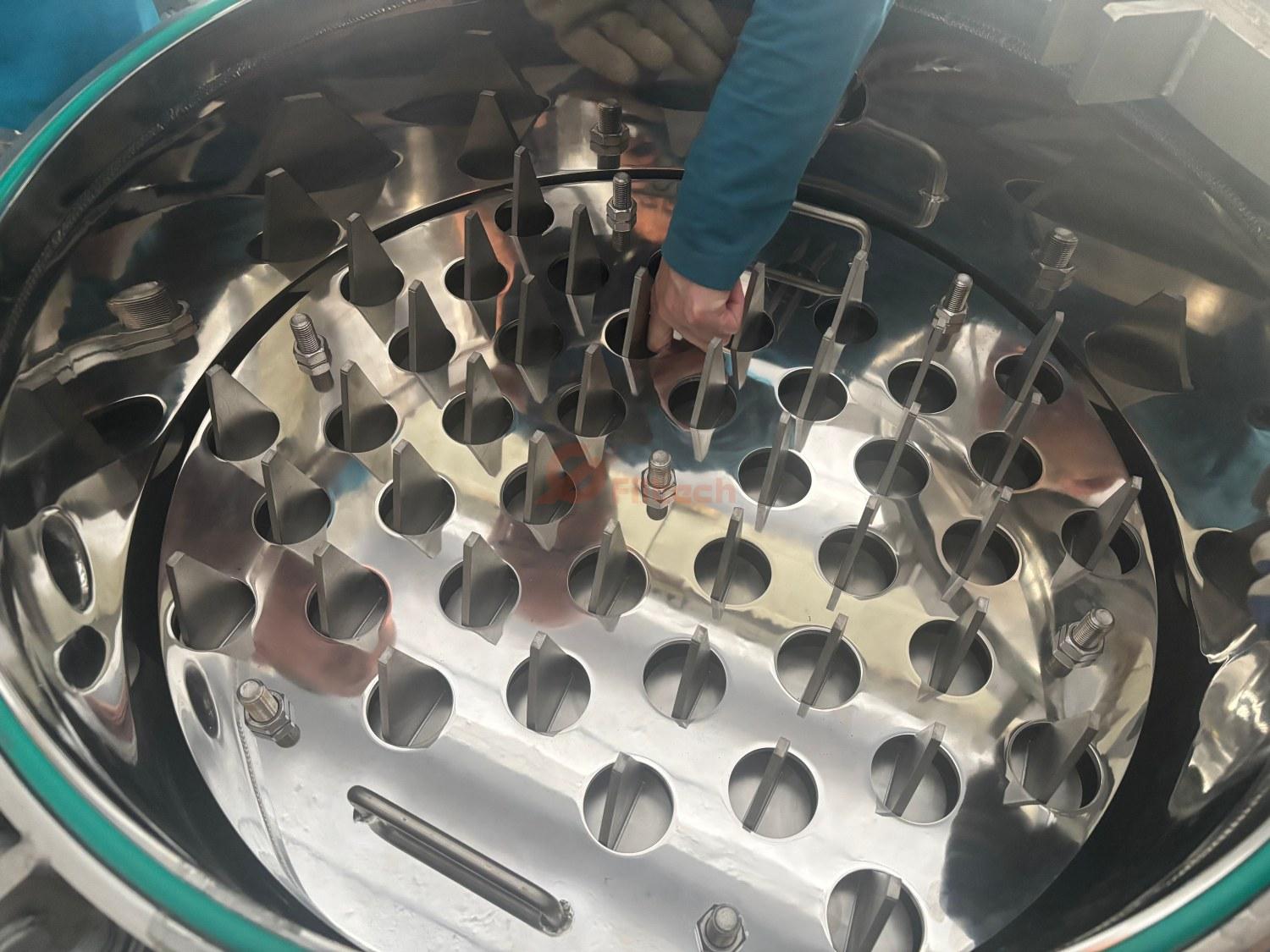
This modified starch filtration and recovery system is currently being used in several modified starch production plants. If you have similar filtration and separation needs, please contact us.
Post time:2026-05-19